Exit Gracefully (or Awkwardly), but Exit.
When Perseverance becomes a risk
QUICK TIP: Walk away when a client, partner, or employer keeps breaking the agreement - spoken or unspoken - because staying costs you more than it brings in. The hard part isn’t the decision. It’s seeing that an exit exists at all, especially if, like me, you were raised to persevere at any cost.
Why don’t we look for the exit?
Every theater has exit signs. Glowing red, impossible to miss, and nobody has ever accused a theater of pessimism for hanging them.
Business doesn’t hang exit signs. We write business plans, launch plans and onboarding checklists, and not one of them contains a door marked “this isn’t working.” We simply assume we’ll stay in the room, whatever happens to the lights.
Perseverance gets all the applause.
Nobody reads the fine print.
We learn early that grit wins. Stay the course. Never quit. Terrific advice for a marathon, which at least has a finish line. Terrible advice for a client who pays late, a partner who stopped pulling, or a job that quietly shrank you, because none of those come with a finish line.
And here is the catch: people standing in that spot don’t read articles about exiting. Not because the advice is bad, but because they believe leaving isn’t on the menu. I know that room.

What does staying too long actually cost?
More than the invoice. It costs the energy you would have put into growth and spent propping up friction instead. It costs the better-fit client you had no room for. And it costs a little of your confidence every month, in installments so small you barely notice them.
I rarely picked the wrong room.
I just stayed as the red flags kept coming.
That took me years to see. The bad situations in my life were not the result of bad choices. I chose well with what I knew. What went wrong came after: I was raised to persevere at any cost, so I stayed, and stayed, and called it character.
Hope is a beautiful place.
It just makes a terrible business model.
Is walking away the same as giving up?
Not even close. Giving up means abandoning something that still has a chance of working. Walking away means reading the situation correctly.
Every relationship, whether client, partner or employer, runs on a contract. Written, spoken or just understood. A healthy one grows inside those lines. A harmful one keeps stepping over them, a little at a time, in ways too small and too random to call red flags. You feel them long before you can prove them. A contract out of balance is a contract at your expense.
Perseverance is a strength with a direction.
Knowing when to exit is a leadership skill.
Looking at a business from the outside is a big part of what I do, and the outside is where exit signs are easiest to read. From inside the room, they hide behind the furniture.
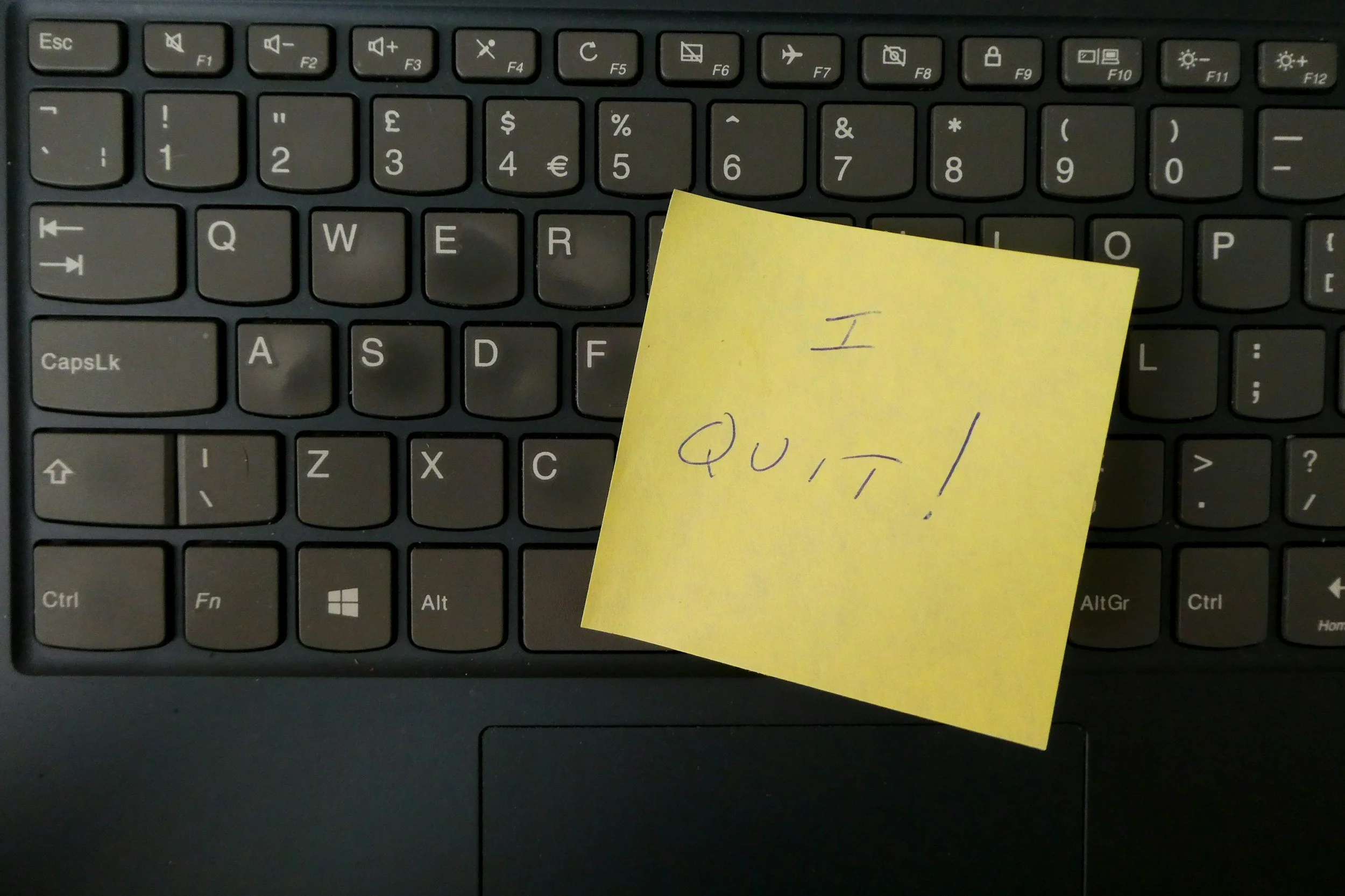
How do you walk away without burning the place down?
Start by calling it what it is. A client who never pays or a partner who never delivers will not change by magic; far more likely, it gets worse. So write it off the way you would write off inventory that never sold: a loss on paper, and no longer a hope.
Exit gracefully (or awkwardly),
but exit while it is still your decision.
Then comes the part nobody expects: gratitude. Not the greeting-card kind, the practical kind. Ask what the whole experience taught you about what to look for next time. Do that, and the write-off stops being a loss and becomes something you keep.
If you are standing in a situation right now and can’t tell whether it’s a rough patch or a dead end, that is exactly what Tap My Brain Spot Treatment is for: one acute challenge, looked at together.
Sometimes the best move forward is pulling the plug.